
Toddler Screaming or Crying at Bedtime: What Actually Helps
A screaming meltdown and sad bedtime tears are two different signals. Here's what each one means, why it happens, and how to help your toddler (and you) get through it.
Screaming and Crying Are Two Different Signals
A toddler screaming at bedtime and a toddler crying at bedtime can sound like the same problem at 8 PM, but they're usually two different signals. Full-volume screaming is almost always about overstimulation or resistance: a nervous system that hit capacity and has nowhere to put it but volume. Crying is softer and sadder. When your toddler is crying at bedtime — not yelling, not raging, but actually crying — they're usually telling you something emotional: I'm scared, I'm sad, I don't want to be alone, I'm not ready for the day to end.
This distinction matters because the response is different. A full-volume meltdown often needs less stimulation and more consistency. A crying toddler usually needs more connection and reassurance. This guide covers both, with a playbook for each.
Neither is easy. But understanding what your child is actually feeling can help you respond in a way that helps them settle instead of accidentally making it worse.
The Quick Read
Crying before bed usually means the handoff from day to night feels too big. Separation, fear, and trouble ending the day can all show up as tears right when the room gets quiet. Screaming usually means the system is flooded: overstimulation, overtiredness, or a protest about who gets to decide when the day ends.
Either way, start with calm, keep the routine predictable, and resist turning comfort into a long negotiation. The next sections break down each signal so you can match your response to what your toddler is actually telling you.
The Most Common Reasons Toddlers Cry at Bedtime
Separation anxiety is the big one. Between 18 months and 3 years, separation anxiety can spike. Your toddler understands that when you leave the room, you're somewhere else, and they want to be where you are. Bedtime is the longest separation of the day, and it happens in the dark.
Fear of the dark or of being alone is also developing at this age. Toddlers have active imaginations but not yet the ability to tell the difference between what's real and what's imagined. Shadows can become monsters. Silence can feel empty. Our guide to a toddler scared at night covers what to do when fear, rather than sadness, is the thing keeping them up.
Other common triggers:
- A change in routine or environment (travel or a new room)
- A new sibling or major family change
- Dropping a nap and being overtired
- Missing a parent who works late or travels
What to Do When They Cry
The goal is to validate the feeling without undoing the routine. That's the balance, and it's not always easy to hold.
When your toddler cries, go in. Sit with them. Keep your voice low and calm. You don't need to fix the feeling. Just acknowledge it. "I know, it's hard to say goodnight. I'm right here." Short, warm, and honest.
Avoid turning the comfort into a long negotiation. One check-in, a brief hug, a reminder that you're close by. Then leave again. If they cry again, you can repeat, but keep each visit short and calm.
Some parents find that a transitional object helps. A stuffed animal, a small blanket, or even a t-shirt that smells like you. These objects give your toddler something to hold onto when you're not in the room.
Why Toddlers Scream at Bedtime
Screaming is a different animal. If you're asking why your toddler is screaming at bedtime, the underlying mechanism is almost always nervous-system overflow, driven by overstimulation, overtiredness, or a need for control.
Toddlers are wired differently than crying babies. When a two or three-year-old screams, they're usually flooded with feelings they can't process yet.
Common triggers include:
- Overstimulation from screens or active play too close to bedtime
- Overtiredness (which looks like hyperactivity and resistance in toddlers)
- A need for autonomy ("I don't want to stop what I'm doing")
- Transition difficulty (going from play mode to sleep mode is genuinely hard)
- A disrupted routine or an unfamiliar environment
The screaming isn't manipulation. It's overflow. Their nervous system is saying "this is too much" and the only output they have is volume. When that same overflow lands as a full floor meltdown instead of a scream, our guide to bedtime tantrums covers what shortens it.
What to Do When They Scream
First, what doesn't help. Matching their energy doesn't work. Raising your voice, rushing through the routine, or getting visibly frustrated tells their nervous system that the environment is tense, which makes it even harder for them to settle.
Giving in to skip the conflict also backfires long-term. If screaming leads to staying up later or getting what they want, the pattern reinforces itself. This isn't about being strict. It's about being consistent enough that your child can predict what happens next.
Reasoning with a screaming toddler is not going to land either. Their prefrontal cortex, the part of the brain that handles logic and self-regulation, is still years away from being fully functional. They literally cannot process "but you need to sleep because you'll be tired tomorrow" when they're in meltdown mode.
The most effective thing you can do is prevent the conditions that lead to screaming in the first place. That means:
- Starting the wind-down earlier than you think you need to
- Cutting stimulating activities at least 30 to 60 minutes before bed
- Keeping the bedtime routine short and the same every night
- Giving small choices to satisfy their need for control ("do you want the blue pajamas or the green ones?")
- Using low voices and dim lighting as bedtime approaches
When the screaming is already happening, your job is to stay calm and present. You don't need to fix it. You just need to ride it out without escalating. Sit nearby. Speak softly. Let them know you're there.
The Transition Trick That Works for Both
One thing that helps a lot of families, whether the 8 PM soundtrack is screams or tears, is giving the transition from day to night something to hold onto. A final step that your toddler looks forward to can break the cycle.
Audio stories are good for this. When your child knows that after lights out, they get to listen to a story, bedtime becomes something they move toward instead of something being forced on them. The story replaces the void that the screaming or the crying was filling. Taylor's Quiet Shell walks an overstimulated toddler through slow breathing inside the narrative, which is the same reset you'd be trying to coach them through anyway.
It won't work the first night. Maybe not the second. But if you stick with it, most families see a real change within a week or two. The protest gets shorter, then less intense, then it stops being part of the routine at all.
Building Safety Into Bedtime
The long-term fix for bedtime crying is making bedtime feel safe. That takes time and repetition, not a single magic trick.
A consistent bedtime routine is the foundation. When your child knows exactly what happens before bed, every single night, the predictability itself becomes a source of comfort. There's a detailed breakdown in our toddler bedtime routine guide if you're looking for a starting point.
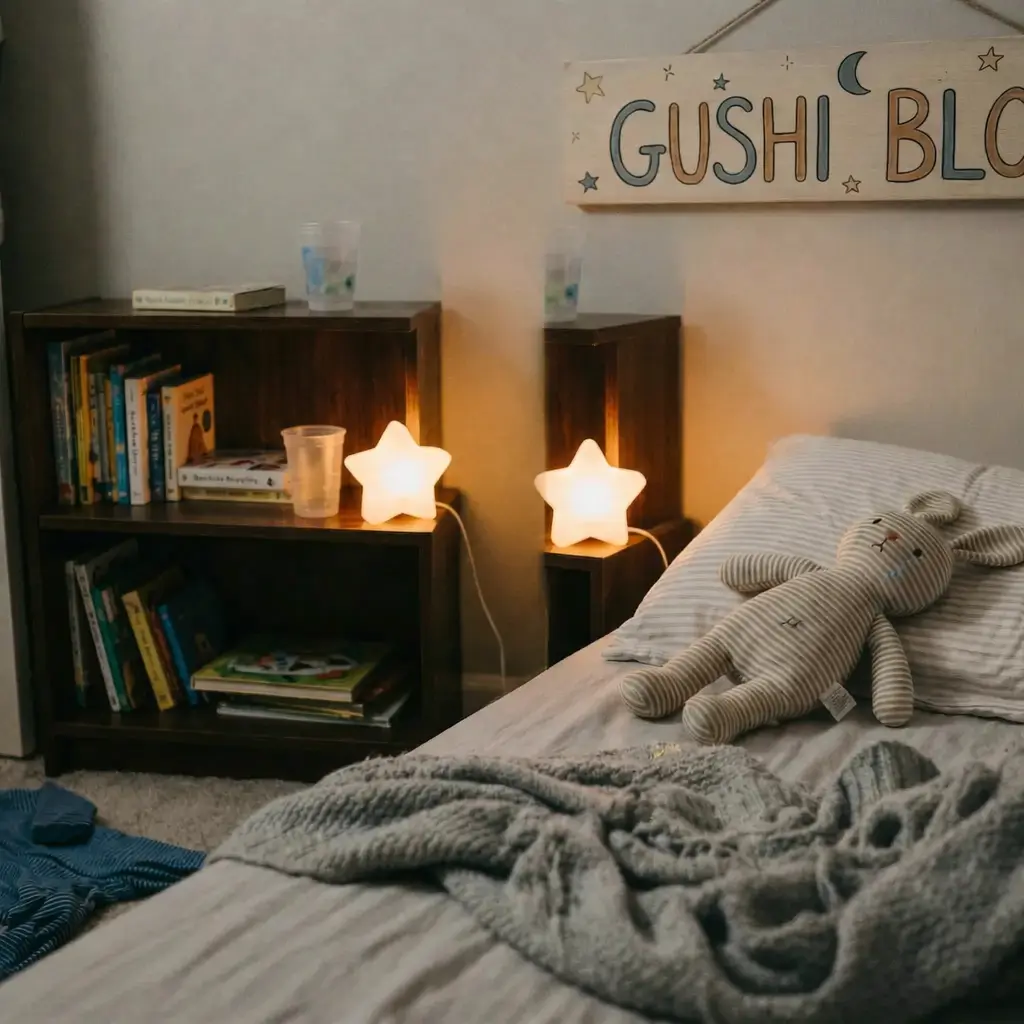
A nightlight can help with darkness fears. So can leaving the door cracked. These aren't crutches. They're reasonable accommodations for a small person who is still learning to feel safe in the dark.
Audio stories can also help fill the silence after you leave the room. Instead of lying in a dark, quiet room with their thoughts, your toddler has a calm voice to focus on. That presence, even if it's not yours, can bridge the gap between wakefulness and sleep. Our bedtime stories app has multi-character narrated stories sized for this slot — Luma the Little Cloud is a quiet story about feeling left out and finding company, which is most of what a crying toddler is asking for, and Counting Clouds with Coco walks them through guided breathing inside the narrative.
When It Doesn't Let Up
If your toddler cries or screams at bedtime every night for more than a few weeks despite a consistent routine and your best efforts, check in with your pediatrician. Persistent nighttime distress can occasionally signal anxiety, sleep apnea, or sensory processing differences that benefit from professional support.
But for most toddlers, bedtime crying and screaming are a season. It peaks, it plateaus, and it passes. Your presence, your consistency, and your patience are doing more than you think, even on the nights when nothing seems to work.
